
 EN
EN
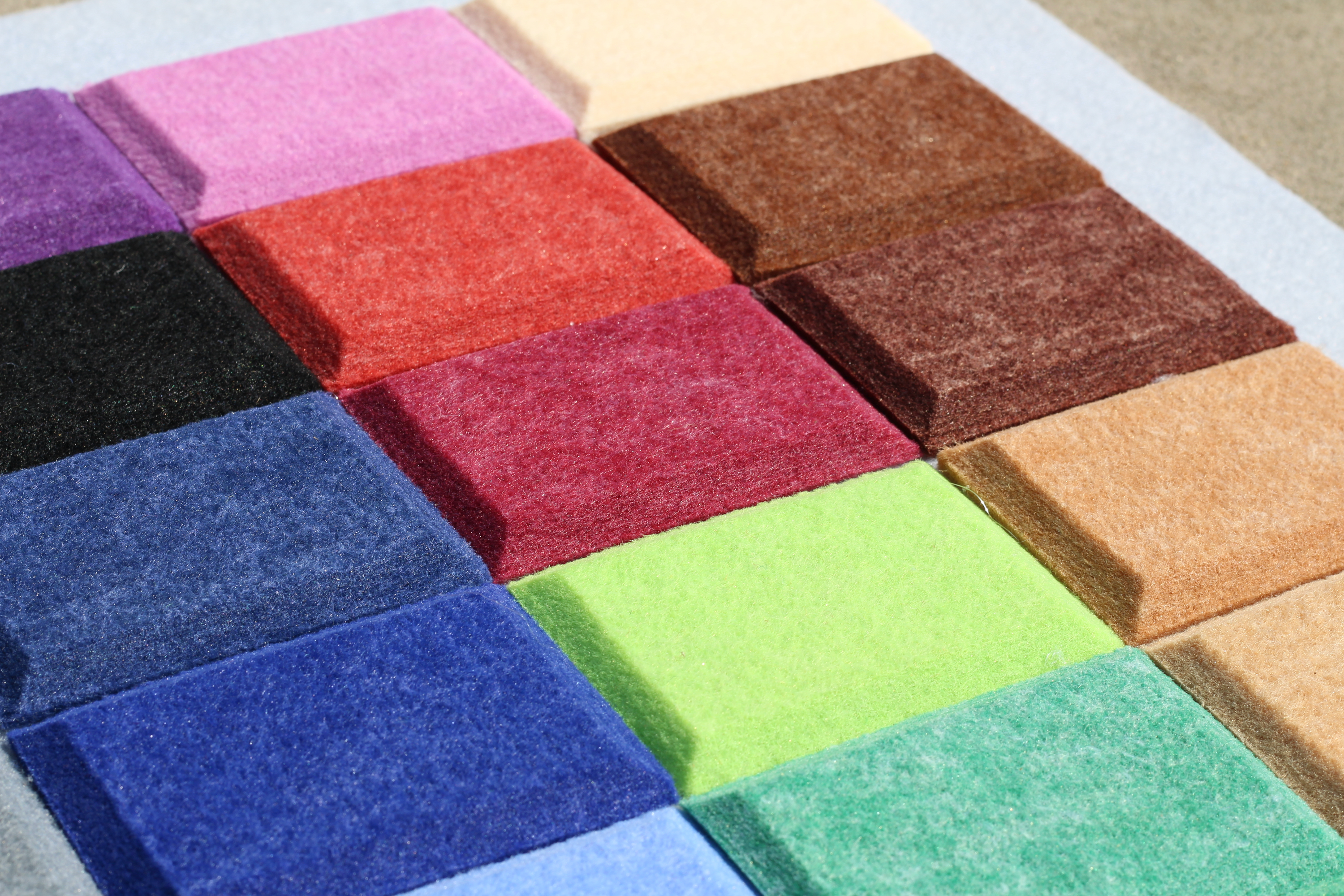
How Pet Acoustic Wall Panel Reduces Wall Noise Through Scientific Absorption
Fibrous density and micro-pore structure: Optimizing sound energy dissipation in pet felt
A pet acoustic wall panel reduces noise through a precise physical mechanism: sound waves strike the surface and penetrate a dense, open-cell fiber network, where internal friction converts acoustic energy into negligible heat. This process hinges on two interdependent properties—fibrous density and micro-pore architecture.
Commercial PET felt panels typically achieve densities of 2–4 kg/m² at 9 mm thickness, creating a labyrinth of interconnected air pockets. As sound enters these micro-pores, air molecules vibrate against fiber walls; viscous friction rapidly dissipates the energy. Research confirms that fiber diameters below 30 microns maximize mid-to-high frequency absorption (500–4000 Hz), while coarser fibers better manage lower frequencies. The random orientation of polyester fibers prevents direct sound transmission paths—instead, waves scatter and lose energy through repeated collisions.
Crucially, PET felt maintains open porosity above 85%, unlike closed-cell foams. This allows deep sound penetration into the material core. Thicker panels (12–24 mm) extend effective absorption down to 250–500 Hz—the range dominated by wall-borne noise like muffled voices, footfall, and low-frequency barks. The fiber blend is engineered for optimal impedance matching with air, minimizing surface reflection and maximizing energy entry.
NRC performance range (0.3–0.95): What it means for real-world wall noise reduction
The Noise Reduction Coefficient (NRC) quantifies how much sound a material absorbs across the 250–4000 Hz range. PET acoustic wall panels deliver an NRC range of 0.3 to 0.95—depending on thickness, density, and mounting method. An NRC of 0.95 indicates 95% of incident sound energy is absorbed rather than reflected.
In practice, a 9 mm panel with NRC 0.45 suits spaces requiring moderate echo control, such as small conference rooms or home offices. In contrast, an NRC 0.90 panel (typically 12 mm or thicker) is ideal for persistent noise environments—open-plan offices, residential walls adjacent to barking dogs, or shared walls in multi-unit dwellings. Higher NRC values significantly reduce both reverberation and airborne sound transmission.
A 2023 study by a leading acoustics institute found that wall-mounted PET panels rated NRC 0.85 reduced perceived loudness by 40% in residential settings—a perceptual shift aligned with the logarithmic nature of human hearing. For reference, an NRC 0.75 panel can achieve ~10 dB insertion loss, which listeners perceive as a halving of noise intensity. When specifying panels, match the NRC profile to the dominant noise spectrum: prioritize 500–2000 Hz performance for speech privacy, and 250–500 Hz for mechanical or low-frequency pet noise. Always request third-party lab reports certified to ASTM C423 or ISO 354 standards.
Material Superiority: Why PET Felt Outperforms Conventional Wall Noise Solutions
Functional advantages: Cut-to-fit precision, humidity resilience, and VOC-free safety for indoor walls
PET felt panels offer unmatched on-site adaptability: they can be cleanly cut with a standard utility knife to fit irregular walls, architectural curves, outlet cutouts, or tight corners—without fraying or shedding fibers. This precision minimizes waste and accelerates installation.
Unlike conventional acoustic foams or fiberglass, PET felt is inherently humidity-resistant. It neither absorbs moisture nor degrades in damp conditions, making it suitable for bathrooms, basements, or humid climates. Its dimensional stability prevents warping, mold, or mildew—and eliminates gaps that would undermine acoustic performance over time.
Critically, PET felt is VOC-free and formaldehyde-free, meeting stringent indoor air quality standards including GREENGUARD Gold. Unlike fiberglass, which can release airborne irritants during handling or over time, PET felt supports healthy, breathable indoor environments—ideal for homes, schools, healthcare facilities, and sensitive occupancies.
Sustainability edge: Recycled PET content, cradle-to-cradle certification, and low-impact manufacturing
PET acoustic wall panels are manufactured from post-consumer recycled polyester—typically repurposing 45–60 plastic bottles per square meter—diverting waste from landfills and oceans. Their production emits approximately 75% less CO₂ than mineral wool or fiberglass, reflecting a substantially lower embodied carbon footprint.
Many PET felt products pursue Cradle to Cradle Certified™ Silver or Gold status, verifying that panels can be fully recycled into new acoustic felt at end of life—closing the material loop. This circular lifecycle supports LEED credits and helps projects meet net-zero carbon targets. By reducing reliance on virgin petroleum feedstocks and enabling responsible end-of-life management, PET felt delivers high-performance acoustics without compromising environmental responsibility.
Installation Flexibility and Proven Performance Across Real-World Settings
Proper installation directly determines how effectively a pet acoustic wall panel absorbs sound. Three mounting methods optimize performance for distinct wall types and acoustic goals.
Wall-mounting best practices: Adhesive, mechanical, and concealed systems for maximum pet acoustic wall panel efficacy
Adhesive mounting—using high-bond tape or construction adhesive—provides a clean, seamless appearance and works best on smooth, dry substrates in low-traffic areas. Mechanical fastening with screws and standoffs offers superior durability on uneven or high-impact walls and allows non-destructive removal for maintenance or repositioning. Concealed mounting systems (e.g., Z-clips or French cleats) hide all hardware while creating a critical air gap behind the panel. A 2023 controlled test demonstrated that adding a 20 mm air gap increased the NRC of a 12 mm PET panel from 0.55 to 0.75—significantly improving low-frequency absorption. Always follow manufacturer guidelines to maintain fire ratings, acoustic warranties, and structural integrity.
Targeted use cases: Homes with barking dogs, open-plan offices, and multi-unit dwellings needing neighbor noise control
PET acoustic wall panels deliver measurable results across diverse real-world applications. In homes with vocal pets, they absorb high-frequency barks and howls before they reflect off walls or transmit through shared structures. In open-plan offices, they reduce speech reverberation—enhancing focus, confidentiality, and acoustic comfort. For multi-unit dwellings, they mitigate flanking noise through party walls: a 2024 survey of apartment residents found that 78% reported a significant reduction in neighbor noise after installing PET panels on shared walls. Their lightweight design enables simple retrofitting—no structural reinforcement or demolition required.

FAQ
What makes PET felt effective for sound absorption?
PET felt's dense fiber network and high porosity allow deep penetration of sound waves, effectively dissipating acoustic energy via internal friction.
What NRC value is recommended for different settings?
An NRC of 0.45 works well for moderate echo control, while 0.90 is ideal for spaces with persistent noise, like open-plan offices or residential walls.
Are PET felt panels safe for indoor use?
Yes, PET felt panels are VOC-free and meet stringent air quality standards, making them ideal for homes, schools, and healthcare facilities.
How sustainable are PET acoustic panels?
They are manufactured from recycled polyester, contribute to a circular lifecycle, and significantly reduce carbon emissions compared to other materials.
What installation methods optimize performance?
Adhesive mounting, mechanical fastening, and concealed systems with air gaps can be used depending on wall type and acoustic goals.