
 EN
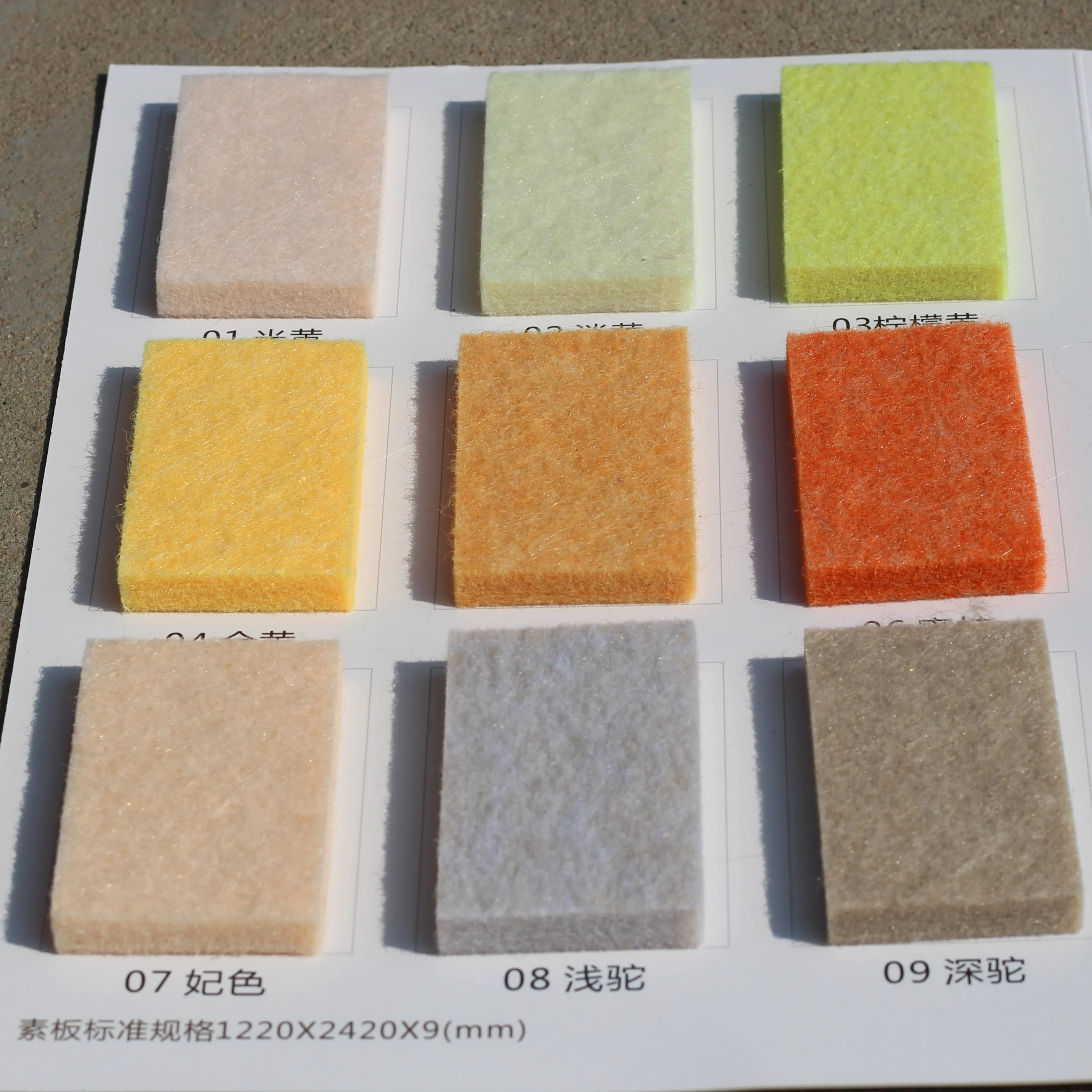
Acoustic Performance: Matching NRC, Thickness, and Air Gaps to Commercial Space Needs
Decoding NRC Ratings for Real-World Reverberation Control in Open-Plan Offices
NRC (Noise Reduction Coefficient) is the average of sound absorption coefficients at 250, 500, 1,000, and 2,000 Hz—frequencies that dominate conversational noise in open-plan offices. An NRC of 0.80 means 80% of incident sound energy is absorbed rather than reflected. While useful as a quick benchmark, NRC’s single-number summary can mask critical frequency-specific behavior. Two panels both rated NRC 0.75 may perform very differently: one might absorb only 0.50 at 250 Hz but 0.95 at 2,000 Hz; another maintains near-uniform absorption across the band. If low-frequency HVAC rumble or male voice reverberation is the primary concern, prioritize flat-response performance over peak NRC.
Use zoned NRC targets to align acoustic treatment with functional priorities and budget:
| Zone | Recommended NRC |
|---|---|
| Open office work zones | 0.80 |
| Circulation paths | 0.65 |
| Support spaces | 0.55 |
This strategy focuses high-performance absorption where speech privacy and cognitive focus are most vulnerable. Always request third-party, frequency-specific absorption data—not just NRC—before finalizing ceiling or wall treatments, since NRC alone does not guarantee balanced reverberation control in real-world conditions.
Why 1-inch vs. 2-inch PET Felt Acoustic Panels Differ Most at Low Frequencies
Sound absorption is strongly influenced by panel thickness and the air gap behind it. Thin (1-inch) PET felt panels absorb mid- to high-frequency sound effectively but offer minimal attenuation below 500 Hz. In contrast, 2-inch panels significantly improve absorption between 125–250 Hz—the range where background mechanical noise and male vocal energy accumulate and degrade acoustic comfort. Doubling panel thickness typically doubles low-frequency absorption in this critical band. Alternatively, adding a 1-inch air gap behind a 1-inch panel yields comparable low-end improvement without doubling material cost.
For open offices with hard floors, glass partitions, and exposed ceilings, specify either 2-inch panels or 1-inch panels with a minimum 1-inch air gap—ideally 2 inches where space allows. Crucially, verify mounting-specific NRC and frequency data from independent labs, not just product brochures: suspended ceiling plenums can enhance real-world performance beyond direct-mount test results. Explicitly define required air gaps in bid documents to ensure consistent, comparable acoustic outcomes across suppliers.
Fire Safety & Code Compliance: Ensuring Class A Rating for PET Felt Acoustic Panels
ASTM E84, NFPA 253, and the Non-Negotiable Role of Class A Certification in Commercial Interiors
Fire safety must precede aesthetics or acoustics when specifying PET felt acoustic panels for commercial interiors. ASTM E84 is the standard test for surface burning characteristics of wall and ceiling finishes, measuring flame spread index (FSI) and smoke developed index (SDI). Class A certification—requiring an FSI ≤ 25 and SDI ≤ 450—is mandated by most U.S. building codes, including the International Building Code (IBC) and NFPA 101 Life Safety Code, for occupied spaces like offices, schools, healthcare facilities, and hospitality venues.
Although NFPA 253 is sometimes referenced, it applies specifically to floor coverings—not wall- or ceiling-mounted panels. Wall and ceiling products fall under ASTM E84, NFPA 255, or the more comprehensive room-corner test NFPA 286. Specifiers should confirm the applicable test method with the authority having jurisdiction before procurement. Class A status is non-negotiable: it supports safe occupant egress, reduces liability exposure, and streamlines code review. Always request full third-party test reports showing both FSI and SDI values—not supplier marketing claims—to validate compliance.
Sustainability Verification: Recycled PET Content and Third-Party Certifications
Specifying PET felt acoustic panels with credible, transparent sustainability data helps project teams meet green building goals—and avoid greenwashing. Focus verification on two pillars: verified recycled content and indoor air quality assurance.
Validating Post-Consumer Recycled PET Content via HPD and Declare Labels
Health Product Declaration (HPD) and Declare labels provide standardized, third-party-reviewed disclosure of material composition and environmental attributes. For acoustic panels, require an HPD that specifies post-consumer recycled PET percentage by weight, not just total recycled content. Leading products contain 50–90% post-consumer PET—but only HPDs verified by the HPDC (Health Product Declaration Collaborative) or Declare labels validated by the International Living Future Institute confirm accuracy. Declare labels also clarify VOC content, end-of-life pathways, and red-list exclusions.
Ensure the label matches your exact specification—including panel thickness, surface finish, and substrate type—as minor variations can affect recycled content claims. Verify issue dates and cross-check third-party program logos against official registries (e.g., living-future.org/declare). This diligence is essential for LEED v4.1 MR credits and WELL Building Standard W09 Material Transparency, particularly for large commercial orders where substitution risk is highest.
GREENGUARD Gold Certification: Why It Matters for Schools, Clinics, and High-Occupancy Buildings
GREENGUARD Gold certification verifies ultra-low VOC emissions under stringent UL 2818 testing protocols—including formaldehyde and total VOC limits up to 10× stricter than standard GREENGUARD. Unlike one-time lab tests, certification requires ongoing quality audits and product surveillance, making it the strongest available indicator of long-term indoor air quality performance.
Specify GREENGUARD Gold for environments with children, patients, or continuous occupancy—such as K–12 classrooms, clinics, call centers, and senior living common areas. Leading manufacturers publish certificates listing exact product names, thicknesses, color options, and mounting configurations. Confirm that the certified configuration matches your selected panel model and installation method to uphold health-focused procurement policies and support LEED IEQ credits or CHPS (Collaborative for High Performance Schools) requirements.
Installation & Integration: Flexible Mounting Options for Retrofit and New Construction
T-Bar Grid, Z-Clips, and Keel Systems—Selecting the Right Method for Your Commercial Space
Mounting method directly impacts both acoustic performance and long-term serviceability of PET felt panels. T-bar grid systems integrate seamlessly into standard suspended ceilings (15/16-inch or 9/16-inch), enabling rapid installation and effortless panel replacement—ideal for open-plan offices and tenant fit-outs. Z-clips create a subtle, adjustable offset from walls or ceilings and allow panels to be removed without tools, making them optimal for retrofits where access to MEP systems or ceiling plenums is required. Keel systems deliver rigid, continuous support for long panel runs and high-traffic zones—especially effective in corridors, lobbies, and reception areas where alignment, durability, and impact resistance matter most.
| Mounting Method | Best For | Key Advantage |
|---|---|---|
| T-Bar Grid | Suspended ceilings, open-plan offices | Fast installation and easy panel replacement |
| Z-Clips | Wall or ceiling retrofit, access needs | Removable panels with minimal visible hardware |
| Keel Systems | Long corridors, lobbies, high-impact areas | Rigid alignment and durable support |
Before finalizing, confirm substrate load capacity and ensure fire-rated assemblies remain intact—particularly where penetrations or fasteners compromise membrane integrity. A field mock-up of one or two panels helps identify alignment, lighting interaction, and acoustic integration issues early—validating both aesthetic intent and performance goals.
FAQs
What is an NRC rating, and why is it important?
NRC (Noise Reduction Coefficient) is a measure of how well a material absorbs sound, averaged across specific frequencies important in conversational noise. A high NRC indicates better sound absorption, which is essential for acoustic comfort in spaces like open-plan offices.
How does panel thickness or air gaps affect sound absorption?
Thicker panels and adding air gaps behind them improve low-frequency sound absorption, which is essential for addressing noise from HVAC systems and low-pitched voices.
Why is Class A fire rating necessary for PET felt panels?
Class A fire rating ensures compliance with safety regulations, minimizing flame spread and smoke development. It is critical for occupied spaces to ensure fire safety and code compliance.
What are HPD and Declare labels?
These are third-party certifications that verify the recycled content, material composition, and environmental attributes of products, ensuring that materials are sustainable and safe for indoor use.
Why is GREENGUARD Gold certification important?
GREENGUARD Gold certification confirms that a product meets strict standards for low VOC emissions, making it ideal for use in environments with high occupancy, such as classrooms or healthcare facilities.
What are some common mounting options for PET felt panels?
T-bar grid systems, Z-clips, and keel systems are common mounting options, suited for various needs such as suspended ceilings, retrofits, and areas requiring high durability or easy panel replacement.
Table of Contents
- Acoustic Performance: Matching NRC, Thickness, and Air Gaps to Commercial Space Needs
- Fire Safety & Code Compliance: Ensuring Class A Rating for PET Felt Acoustic Panels
- Sustainability Verification: Recycled PET Content and Third-Party Certifications
- Installation & Integration: Flexible Mounting Options for Retrofit and New Construction
-
FAQs
- What is an NRC rating, and why is it important?
- How does panel thickness or air gaps affect sound absorption?
- Why is Class A fire rating necessary for PET felt panels?
- What are HPD and Declare labels?
- Why is GREENGUARD Gold certification important?
- What are some common mounting options for PET felt panels?