 EN
EN
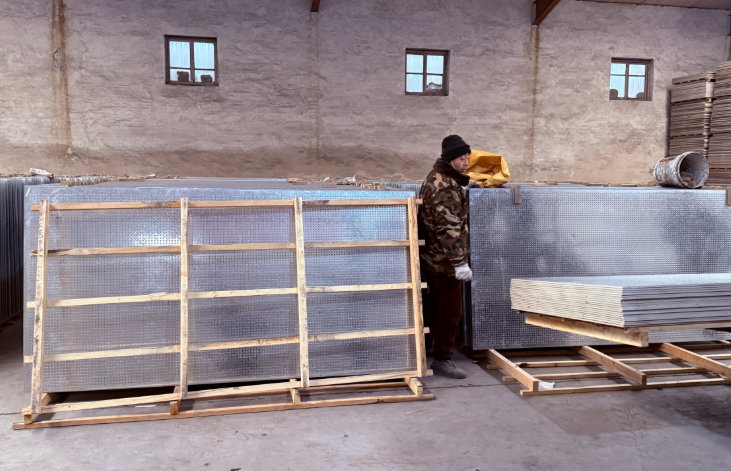
Unmatched Fire Resistance for Passive Fire Protection
Non-combustibility and ASTM E136 Certification
Calcium silicate board is a cornerstone of passive fire protection due to its inherent non-combustibility. Unlike combustible materials, it will not ignite, support flame spread, or generate significant smoke when exposed to fire. This critical property is verified through ASTM E136—the definitive standard for non-combustibility testing—ensuring the material maintains structural integrity under intense heat. Its non-fuel nature forms the foundation of effective compartmentalization, slowing fire progression and preserving life-safety pathways.
Enabling Fire-Rated Assemblies and Compartmentalization
Because of its proven fire resistance, calcium silicate board is widely specified in certified fire-rated walls, floors, and ceilings—commonly achieving 1- and 2-hour ratings per ASTM E119 and UL 263. These assemblies create robust physical barriers that contain fires within their origin zone, protecting structural elements, limiting property loss, and preserving safe egress routes. That containment buys critical time for occupant evacuation and emergency response—making calcium silicate board integral to modern building safety codes and performance-based fire strategies.
Reliable Moisture and Mold Resistance in Challenging Environments
Calcium silicate board excels where moisture and humidity threaten conventional building materials—without relying on surface treatments or chemical additives.
Dimensional Stability Under High Humidity and Thermal Cycling
Unlike gypsum boards—which swell, warp, or delaminate when wet—calcium silicate board exhibits exceptional dimensional stability. Per ASTM C1185, it shows less than 0.5% linear expansion after 24-hour water immersion, outperforming cement board by 65%. Its non-hygroscopic crystalline structure prevents molecular-level water absorption. It also withstands thermal cycling from –20°C to 80°C with no measurable distortion—making it ideal for food processing washdown areas, indoor pool enclosures (80–90% RH), and coastal buildings exposed to salt-laden humidity. This stability ensures long-term flatness of tile, drywall, and finish surfaces—reducing callbacks and remediation costs in high-moisture zones.
Inherent Mold Resistance Without Added Biocides
With a naturally alkaline pH >10.5 and zero organic content, calcium silicate board provides intrinsic resistance to mold and microbial growth. Independent testing per ASTM D3273 confirms zero fungal growth after 28 days at 95% RH—outperforming paper-faced gypsum by 100%. Crucially, this resistance requires no biocides, surface coatings, or migrating antimicrobial agents that degrade over time. Its low moisture retention (<5% by weight) further denies mold the hydration it needs to propagate. This dual-action moisture-and-mold defense makes it a trusted specification for healthcare facilities, labs, pharmaceutical cleanrooms, and other environments where air quality and infection control are non-negotiable.
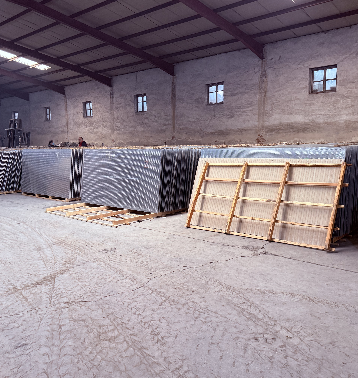
Effective Acoustic and Thermal Performance for Building Efficiency
Sound Insulation Performance (STC/Rw) Across Key Frequencies
In multi-unit residential, hospitality, and mixed-use buildings, consistent sound control is essential for occupant well-being. Calcium silicate board’s high density and rigid, homogeneous structure deliver reliable airborne noise attenuation across the full audible spectrum—particularly improving low- and mid-frequency performance where lightweight alternatives often fall short. When incorporated into tested wall and ceiling assemblies, it contributes meaningfully to STC and Rw ratings—supporting acoustic privacy without added mass or complex layering.
Contribution to Thermal Envelope Integrity and Energy Savings
Calcium silicate board enhances thermal envelope performance through its low thermal conductivity (typically ~0.45–0.55 W/m·K). By reducing conductive heat transfer through walls and ceilings, it lowers HVAC load and supports energy efficiency goals. In optimized high-performance assemblies, studies indicate potential HVAC energy reductions of up to 50% compared to standard construction—especially when combined with continuous insulation strategies. Its synergy of acoustic dampening, fire resilience, and thermal control positions it as a high-value, multi-functional component in sustainable, code-compliant building design.
Long-Term Durability, Low Lifecycle Maintenance, and Sustainable Attributes
Calcium silicate board delivers decades of service in demanding interior and semi-exposed applications—without degradation from moisture, freeze-thaw cycles, rot, or corrosion. Its mineral composition eliminates the need for protective sealants, primers, or coatings required by gypsum or fiber-cement alternatives. Because it resists warping, mold, and fire-related compromise, maintenance interventions are rare—even in high-traffic or high-humidity facilities. Lifecycle cost analysis consistently favors calcium silicate board: its upfront investment is offset by avoided repairs, replacements, and operational disruptions over time. Manufactured from abundant limestone and silica, it contains no volatile organic compounds (VOCs) and is fully recyclable at end-of-life—contributing to reduced embodied carbon and lower landfill burden. For architects and owners prioritizing resilience, responsibility, and long-term value, calcium silicate board remains a benchmark material for high-performance, future-ready construction.
FAQ
What is calcium silicate board?
Calcium silicate board is a high-performance construction material known for its fire resistance, moisture resistance, mold resistance, and acoustic properties. It is made from natural limestone and silica, offering durability and sustainability.
How does calcium silicate board provide fire protection?
Calcium silicate board is non-combustible and certified under ASTM E136. It does not ignite, spread flames, or produce smoke, making it ideal for fire-rated assemblies to delay fire progression and protect lives and property.
Why is calcium silicate board resistant to mold?
Due to its alkaline pH (>10.5) and absence of organic content, calcium silicate board naturally resists mold and microbial growth, even in high-humidity environments. No biocides or chemical treatments are required.
Where can calcium silicate board be used?
It is versatile and can be used in fire-rated walls, ceilings, healthcare facilities, cleanrooms, high-humidity areas, and places requiring sound and thermal insulation.
Is calcium silicate board environmentally friendly?
Yes, it is made from abundant minerals, is VOC-free, fully recyclable, and contributes to sustainable building practices by reducing landfill waste and operational maintenance.