
 EN
EN
What Is Fireproof Cement Board? Composition, Standards, and Key Properties
Core Materials and Manufacturing Process
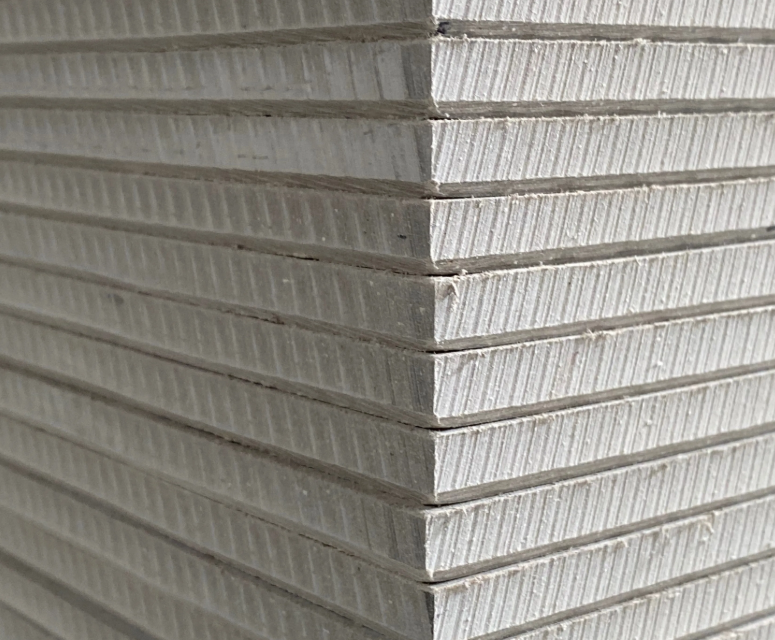
Fireproof cement board is a non-combustible panel engineered for high-temperature resistance. It combines Portland cement, finely ground silica, and cellulose fibers—free of organic binders that could fuel flames—with water to form a dense, stable matrix. The slurry is pressed under high pressure and cured in controlled kilns to achieve uniform density, dimensional accuracy, and long-term stability. Unlike gypsum boards, it resists cracking, swelling, and delamination under extreme heat. Standard thicknesses range from 5 mm to 30 mm, supporting diverse applications—from interior fire barriers to exterior cladding.
ASTM E136 and UL 723 Compliance for Fire Resistance
To qualify as fireproof, cement board must meet internationally recognized non-combustibility and surface-burning standards. ASTM E136 confirms the material contributes no fuel to fire—critical for passive fire protection. UL 723 evaluates flame spread and smoke development; Class A rating (flame spread ≤ 25, smoke developed ≤ 450) is standard for certified products. Many boards also sustain structural integrity for up to 240 minutes in furnace tests per GB/T 9978, aligning with IBC Chapter 7 requirements for fire-resistance-rated assemblies. These certifications collectively validate its role in modern building codes and life-safety systems.
Why Choose Fireproof Cement Board? Performance Advantages Over Alternatives
Comparison with Gypsum-Based Fire-Rated Boards
Gypsum-based fire-rated boards rely on chemically bound water for thermal resistance—but lose strength rapidly when exposed to moisture or sustained heat, risking sagging, crumbling, or loss of fire rating. Fireproof cement board remains dimensionally stable and structurally sound in both wet and high-heat environments. Its superior impact resistance reduces damage in high-traffic or industrial settings, lowering long-term maintenance and replacement costs. For commercial and institutional projects where reliability and longevity are paramount, cement board delivers consistent fire performance without compromise.
Superior Moisture, Mold, and Impact Resistance
With low water absorption (<10% by weight), fiber cement board inhibits mold growth and rot—even in continuously damp areas like bathrooms, kitchens, laboratories, and exterior sheathing. Its dense, mineral-based composition withstands mechanical abuse from tools, equipment, or daily use without chipping or cracking. This durability ensures fire barriers remain intact over decades, preserving both safety and hygiene. In demanding B2B applications, this dual resilience—fire and physical—makes it a more robust choice than gypsum or magnesium oxide alternatives.
Critical Applications of Fireproof Cement Board in B2B Construction
Exterior Sheathing and Firewall Assemblies
Fireproof cement board serves as a critical non-combustible sheathing layer in commercial and industrial buildings, especially where framing includes steel or combustible wood. It slows flame propagation across façades and protects structural elements from radiant and conductive heat. In firewall assemblies, multi-layer configurations achieve two- or three-hour fire-resistance ratings—meeting strict compartmentalization mandates. Its moisture resistance makes it ideal for humid or coastal climates, where gypsum would degrade and compromise fire performance. Thermal stability further prevents warping or joint failure during temperature cycling, ensuring lasting envelope integrity.
Shaft Walls, Elevator Enclosures, and Stairwell Linings
Vertical shafts—including elevator hoistways, stairwells, and utility chases—require continuous, gap-free fire barriers to prevent vertical fire and smoke migration. Fireproof cement board provides seamless lining with minimal joint gaps and high compressive strength. Its impact resistance is particularly valuable in elevator enclosures, where repeated contact with carts, equipment, or maintenance tools would damage softer substrates. In stairwells, it maintains load-bearing capacity long enough to support safe evacuation and firefighter access. Most leading products carry UL-listed system approvals for shaft wall assemblies, simplifying specification and streamlining code review.
Installation Best Practices and Code Compliance Considerations
Fastening, Joint Treatment, and Compatibility with Cladding Systems
Secure fireproof cement board using corrosion-resistant fasteners—typically stainless steel or coated screws—spaced at 6–8 inches on center along edges and 12 inches in the field, per manufacturer guidelines. Joints must be fully treated with alkali-resistant fiberglass mesh tape and a non-combustible, cementitious setting compound to preserve fire-resistance continuity. When integrated into rainscreen or curtain wall systems, maintain a continuous air and moisture barrier behind the board to prevent thermal bridging and interstitial condensation—both of which can undermine long-term fire and energy performance.
Meeting IBC Chapter 7 and Local Fire Marshal Requirements
IBC Chapter 7 requires all penetrations, transitions, and terminations in fire-resistance-rated assemblies to be sealed with UL-listed or FM-approved fire-stop systems. Field verification—by third-party inspectors or local fire marshals—is often required before cladding installation, focusing on fastener spacing, joint treatment completeness, and edge protection. Proactively submitting a detailed assembly submittal, including tested details and fire-stop specifications, helps avoid delays and rework. Early coordination with authorities having jurisdiction (AHJs) ensures alignment on inspection protocols and documentation—key to achieving final sign-off without compromise to the rated system.
FAQs
What is fireproof cement board made of?
Fireproof cement board is primarily composed of Portland cement, finely ground silica, cellulose fibers, and water. It contains no organic binders, making it highly resistant to fire.
How does fireproof cement board differ from gypsum boards?
Unlike gypsum boards, fireproof cement boards are dimensionally stable and structurally sound in both wet and high-heat conditions. They are also more resistant to impact, mold, and moisture.
What certifications must fireproof cement boards meet?
Fireproof cement boards must comply with ASTM E136 for non-combustibility and UL 723 for surface-burning characteristics. Many products also pass tests for up to 240 minutes of structural integrity under furnace conditions.
Where can fireproof cement boards be used?
These boards are used in applications like exterior sheathing, firewalls, shaft walls, elevator enclosures, and stairwell linings. They are ideal for both commercial and industrial buildings.
What are the installation guidelines for fireproof cement board?
Use corrosion-resistant fasteners and treat all joints with alkali-resistant mesh tape and cementitious setting compounds. Ensure proper integration with other building systems for long-term effectiveness.