 EN
EN
Understanding Quality Benchmarks for Mineral Fiber Ceiling Tiles
Core performance metrics: Density, sag resistance, fire rating (Class A/EN 13501-1), and sound absorption (NRC)
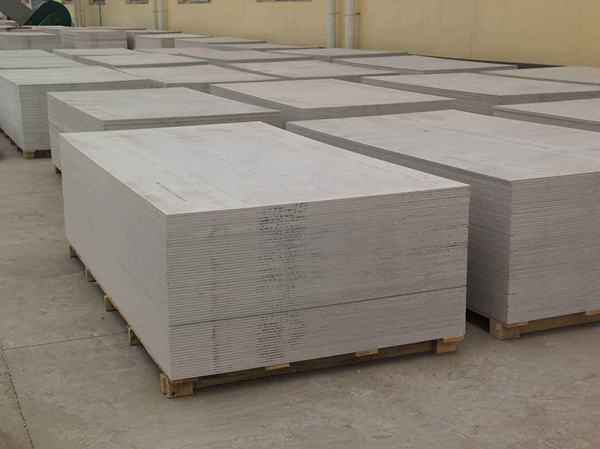
Evaluating mineral fiber ceiling tiles hinges on four interdependent performance metrics. Density (kg/m³) directly influences structural integrity and impact resistance—tiles in the 350–450 kg/m³ range deliver optimal durability for commercial office environments without compromising acoustic performance. Sag resistance ensures dimensional stability under humidity fluctuations and is validated through ASTM C635 testing, which measures deflection under sustained load. Fire safety is non-negotiable: Class A (ASTM E84) or Euroclass A2-s1,d0 (EN 13501-1) certification confirms non-combustibility and limits flame spread—critical for life safety and code compliance. For acoustics, the Noise Reduction Coefficient (NRC) quantifies mid-frequency sound absorption; an NRC ≥0.70 provides effective speech privacy and ambient noise control in open-plan spaces. Crucially, these metrics must be balanced—excessively dense tiles may reduce NRC, while ultra-lightweight formulations often compromise sag resistance and fire performance.
Standards compliance: ASTM C635, EN 13964, and ISO 11654 — what each certifies and why it matters
International standards provide objective, third-party validation of performance claims. ASTM C635 governs suspension system compatibility and sag resistance, requiring ≤1/360th span deflection under standardized load and humidity cycling. EN 13964 sets the benchmark for European ceiling systems, integrating fire reaction (aligned with EN 13501-1), mechanical strength, dimensional tolerance, and long-term stability. ISO 11654 standardizes acoustic testing methodology—ensuring NRC values reflect real-world absorption across the 200–2000 Hz frequency band used in speech intelligibility assessments. Factories lacking these certifications risk delivering tiles prone to warping, inconsistent fire behavior, or unreliable acoustic performance. As confirmed by the 2023 Construction Specifier Institute report, 93% of architectural specifiers require third-party verification—making compliance not just a technical detail, but a procurement prerequisite.
Vetting Professional Factories for Reliable Mineral Fiber Ceiling Tile Supply
Certification & operational credibility: ISO 9001, BSCI, export licenses, and on-site audit transparency
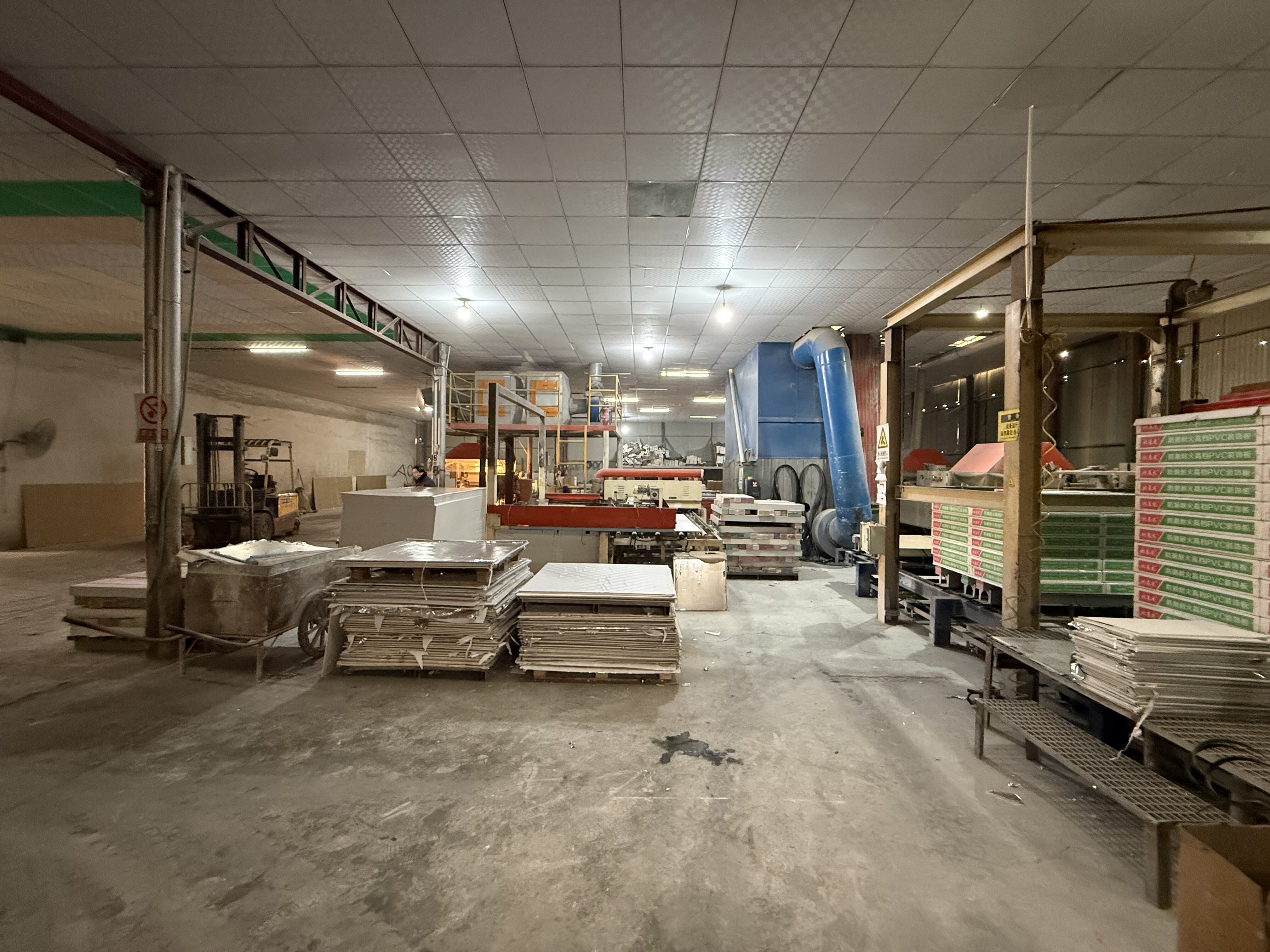
A credible factory demonstrates quality through both documentation and observable practice. ISO 9001 certification validates a rigorously maintained quality management system—from raw material intake to final inspection—while BSCI (Business Social Compliance Initiative) attests to ethical labor practices and occupational health safeguards. Valid export licenses confirm legal authorization for international shipment and adherence to customs and product safety regulations. Yet paper credentials alone are insufficient: on-site audits—conducted directly or via trusted third parties—are essential to verify actual conditions. Key observations include dust containment during fiber handling, climate-controlled raw material storage, consistent curing cycles, and calibrated in-line density and NRC testing equipment. Factories that proactively share audit reports and welcome inspections signal operational maturity; resistance or vagueness often precedes quality deviations that later manifest as failed fire tests or acoustic inconsistencies.
End-to-end traceability: Batch-specific documentation, QR-coded material passports, and ERP-backed quality logs
Leading suppliers now embed traceability into every production step—not as a compliance checkbox, but as a functional quality safeguard. Each batch receives a unique identifier linked to granular documentation: source of mineral wool and binders, mixing temperature and dwell time, pressing pressure, kiln profile, and post-cure conditioning parameters. QR-coded material passports provide instant, mobile-accessible access to this data for site inspectors, QA teams, or customs authorities. Underpinning this is an integrated ERP system that logs every quality checkpoint—including density measurements, ASTM C635 sag results, EN 13501-1 fire test certificates, and ISO 11654-accredited NRC reports—and ties them irrevocably to the batch ID. This end-to-end visibility enables precise root-cause analysis: if a tile fails a field sag test, you can isolate affected lots within minutes—not weeks—and initiate targeted corrective action. Such transparency reflects institutionalized quality discipline and materially strengthens supply-chain resilience.
Optimizing Sourcing Strategy: Factory-Direct Procurement for Mineral Fiber Ceiling Tiles
Balancing risk and ROI: Lead time predictability, MOQ flexibility, logistics integration, and Tier-2 cluster advantages
Factory-direct procurement transforms mineral fiber ceiling tile sourcing from a transactional cost exercise into a strategic quality and schedule enabler. Direct engagement eliminates intermediaries, yielding tighter lead time control—critical for fast-track construction where a 10-day delay can cascade into six-figure penalties. MOQ flexibility allows alignment with project phasing: smaller, staggered orders reduce on-site inventory costs and obsolescence risk without triggering premium pricing. Integrated logistics—where the factory coordinates sea/air freight, bonded warehousing, and customs clearance—reduces handling errors and cuts landed costs by 18–24%, per industry benchmarks. Sourcing from Tier-2 manufacturing clusters (e.g., Jiangsu or Shandong provinces in China) offers added advantages: proximity to basalt and slag suppliers shortens raw material lead times, while regional infrastructure supports rapid prototyping and small-batch validation—accelerating specification finalization. The result is a procurement model that simultaneously lowers total cost of ownership, tightens quality accountability, and builds responsive, long-term supplier partnerships.
FAQ Section
What are the critical performance metrics of mineral fiber ceiling tiles?
Key metrics include density, sag resistance, fire rating (Class A/EN 13501-1), and sound absorption (NRC). These factors influence durability, humidity performance, fire safety, and acoustic properties.
Why is standards compliance important for ceiling tiles?
Compliance with standards like ASTM C635, EN 13964, and ISO 11654 ensures the product meets quality, safety, and functional benchmarks required by architects and construction codes.
What certifications should I look for in a manufacturer?
Look for ISO 9001 for quality management, BSCI for ethical practices, and export licenses. Additionally, ensure the factory is transparent about on-site audits and operational conditions.
What is the importance of traceability in manufacturing?
Traceability helps track every batch's quality metrics, ensuring quick identification and resolution of issues, thus maintaining consistent product reliability.
Why should I consider factory-direct procurement?
Factory-direct procurement reduces intermediaries, improves lead time predictability, offers MOQ flexibility, and lowers total costs. It also ensures tighter quality control and smoother logistics.