
 EN
EN
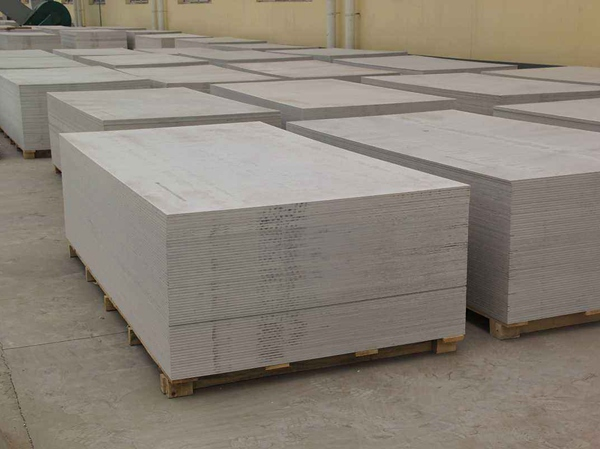
Moisture Resistance and Long-Term Durability
Water Absorption ≤5% and Stable Performance in >95% RH Environments
Quality PVC gypsum board must demonstrate a water absorption rate of no more than 5% by mass, as defined by ASTM C1396 (2017) for moisture-resistant gypsum panels. This threshold ensures the core remains unsaturated under splashes or direct moisture exposure—preventing weakening, delamination, and loss of structural integrity. In environments where relative humidity exceeds 95%, the board’s PVC laminate and treated core function as a dual barrier. Independent testing confirms that such boards retain over 95% of their original flexural strength after 30 days of continuous exposure to saturated humidity, while untreated gypsum panels lose up to 40% of theirs. This stability arises from hydrophobic additives in the core and the impermeable PVC facing, which jointly inhibit water vapor transmission. As a result, the board maintains dimensional stability—resisting sagging and joint failure—in demanding applications like bathrooms, kitchens, and indoor pool areas where condensation is persistent.
Mold and Mildew Inhibition via Integrated Biocidal Treatments
Integrated biocidal treatments—typically silver-based formulations or isothiazolinone compounds—are uniformly dispersed throughout the board during manufacturing. Per ASTM D3273 (2020), treated boards achieve a mold resistance score of 10: the highest possible rating, indicating no visible fungal growth after 28 days of controlled inoculation. Unlike surface-applied coatings, these biocides are embedded in both core and facing, ensuring long-term efficacy without leaching or degradation. Third-party lab reports confirm that antimicrobial performance remains intact even after accelerated aging cycles, with zero surface colonization observed. For high-hygiene environments—including hospitals, food processing facilities, and residential basements—this built-in defense delivers durable, low-maintenance wall systems that resist staining, odors, and air quality degradation caused by mold.
Fire Safety Compliance: Achieving A1/A2 Non-Combustible Ratings
EN 13501-1 Certification: Why A1 Classification Is Essential for PVC Gypsum Board
Achieving an A1 classification under EN 13501-1 is essential for life safety and regulatory compliance in high-risk buildings. A1-rated materials are fully non-combustible and make no contribution to fire growth—even under extreme thermal stress. The standard mandates that furnace temperature rise remains ≤30 °C, mass loss stays ≤50%, and no sustained flaming occurs. While gypsum is inherently fire-resistant, the PVC coating introduces organic content; top-tier manufacturers counter this by engineering the polymer layer and core additives to keep gross calorific potential below 2.0 MJ/kg. This precision ensures full A1 compliance—not just nominal certification—and guarantees safe use in fire walls, elevator shafts, and escape routes as part of a robust passive fire protection strategy.
Real-World Flame Spread, Smoke Density, and Toxicity Performance
Beyond classification, real-world fire behavior hinges on smoke density, droplet formation, and toxic emissions. Under EN 13501-1, A1- and A2-rated boards must meet the s1 subclass for smoke production—signifying very low smoke density that preserves visibility during evacuation—and the d0 designation, confirming no flaming droplets or particles fall during exposure. These attributes are critical for occupant safety and firefighter operations. Additionally, the mineral-rich core releases chemically bound water when heated, cooling the material and slowing flame spread. Crucially, the low-organic formulation minimizes toxic smoke generation compared to conventional plastic-based panels, with post-fire analysis showing negligible release of hydrogen cyanide or carbon monoxide. This combination—non-combustibility, low smoke, and no flaming droplets—makes A1-certified PVC gypsum board a trusted passive fire protection element in high-rise hospitals, data centers, and public infrastructure.
Dimensional Stability and Mechanical Strength for Reliable Installation
Flexural Strength ≥3 MPa and Optimal Density (6–12 kg/m²)
Flexural strength determines how well PVC gypsum board resists bending under load during transport, handling, and installation. Per EN 520, Type A gypsum boards must achieve a minimum flexural strength of 3 MPa—a benchmark that ensures resilience against cracking and damage on-site. Equally important is density: the optimal range of 6–12 kg/m² balances lightness for efficient handling with sufficient mass to resist sagging and impact. Boards below 6 kg/m² often suffer poor screw-holding capacity and edge crumbling; those above 12 kg/m² add unnecessary weight to ceiling grids, increasing labor and support costs. Independent lab tests confirm that boards meeting both criteria consistently outperform lower-grade alternatives in static load and long-term durability assessments—making these parameters essential selection criteria for reliable installations.
Fastener Retention ≥150 N and Joint Integrity After Thermal Cycling
Fastener retention—measured as pull-out force—is a key indicator of secure screw and fixture anchorage. A minimum of 150 N is recommended, particularly for ceiling applications where vibration or minor building movement could otherwise cause loosening, sagging, or detachment. Equally vital is joint integrity under thermal cycling: buildings naturally expand and contract with temperature shifts, and joints must accommodate this without cracking or gapping. Field studies show that properly formulated PVC gypsum boards maintain tight, seamless joints after more than 500 thermal cycles between –10°C and 40°C. This resilience stems from optimized core composition and flexible edge profiles. Specifiers should therefore verify both ≥150 N fastener retention and validated thermal cycling performance to ensure maintenance-free, long-term reliability.
Functional Surface Properties: Cleanability, Finish, and Acoustic Contribution
The surface of a quality PVC gypsum board is engineered for hygiene, durability, and acoustic performance. Its non-porous, smooth PVC film resists staining and enables rapid cleaning with mild detergents—critical in hospitals and food processing facilities where downtime must be minimized. Available in glossy, matte, and textured finishes, the laminated surface also incorporates scratch-resistant and anti-fingerprint technologies to preserve appearance over time. Beyond aesthetics and maintenance, the dense gypsum core contributes meaningfully to sound control: when integrated into wall assemblies, these boards help achieve a weighted sound reduction index (Rw) of 35–40 dB—enhancing speech privacy and reducing ambient noise in offices, schools, and residential interiors. Together, these functional properties position PVC gypsum board as a high-performance, low-maintenance solution for modern interior construction.
FAQ Section
What does water absorption ≤5% mean for PVC gypsum boards?
Water absorption ≤5% ensures that the board remains unsaturated under moisture exposure, preventing weakening, delamination, and structural integrity loss—all crucial in high-humidity environments.
How does integrated biocidal treatment protect against mold?
The integrated biocidal treatment uniformly disperses agents like silver or isothiazolinone to inhibit fungal growth for long-term mold resistance without leaching or degrading.
What is the significance of A1 fire classification under EN 13501-1?
A1 classification confirms that the material is non-combustible and fully fire-safe, making it ideal for applications like escape routes and fire walls.
How do dimensional stability and mechanical strength impact installation?
Dimensional stability and mechanical strength ensure the board stays intact during handling and use, resisting sagging, edge crumbling, and screw detachment for reliable installation.
What are functional surface properties of PVC gypsum boards?
These properties include stain resistance, rapid cleanability, acoustic contributions of Rw 35–40 dB, and durable finishes for aesthetics and hygiene compliance.
Table of Contents
- Moisture Resistance and Long-Term Durability
- Fire Safety Compliance: Achieving A1/A2 Non-Combustible Ratings
- Dimensional Stability and Mechanical Strength for Reliable Installation
- Functional Surface Properties: Cleanability, Finish, and Acoustic Contribution
-
FAQ Section
- What does water absorption ≤5% mean for PVC gypsum boards?
- How does integrated biocidal treatment protect against mold?
- What is the significance of A1 fire classification under EN 13501-1?
- How do dimensional stability and mechanical strength impact installation?
- What are functional surface properties of PVC gypsum boards?